Guest room decor: How to make comfortable and welcoming

Learning to decorate a guest room decor involves much more than just picking out nice looking furniture and matching colors. Your guest bedroom will be most effective when it makes your guests feel comfortable, relaxed, and at ease while being integrated into the decor of the rest of your house.
As you begin to design your guest bedroom decor, try to imagine what the stay would be like for your guests. They will require a comfortable place to rest at night; adequate lighting so they can easily navigate the space during the day or evening; storage options for their items; an environment where they feel private; and a space that feels like a welcoming retreat rather than a dusty attic.
The great thing about decorating a guest room is you do not have to have a big space or completely redo the whole room. Just by changing your bed linens, adding some easy-to-use storage options, planning the lighting correctly, using soothing colors, and picking a couple of items to add to the decor, you can totally change the way the room feels.
This article provides an overview of the steps involved in decorating a guest room, including layout, color selection, bed linens, lighting options, organization/storage, wall art/decoration, creating functional guest rooms in small spaces, using multi-purpose rooms as guest rooms, providing privacy for your guests, and avoiding some common mistakes made when decorating guest rooms.
What Makes a Guest Room Feel Welcoming?
Before you begin decorating your guest room, you should first learn what will make your guests comfortable.
The guest room decor will likely feel organized, peaceful, tidy, and purposely made ready for your guests. Your guest room bed should look like it wants to receive someone, there are no obstacles in your way as you walk through the room, and all the things that you need daily are within arm’s reach.
Decorating a guest room involves taking into account other factors such as the placement of items in the room (i.e. bedside table, lamp), where guests can store their belongings, and where they will hang their clothes. These practical aspects of decorating a guest room are likely to have a much greater impact on a guest’s comfort level than adding additional decorations.
The purpose of this is to make a room feel loved and taken care of, rather than recreate a high-end luxury hotel.
Plan the Layout Before Decorating
The initial phase of your guest room decor would be to determine what type of use you want for the room.
Start with the bed, which is typically the biggest item of furniture. Place the bed so that guests have room to walk into and through the room, and will not need to squeeze past any of your furniture.
When considering how to design a guest room, provide adequate clearance for walking around the bed as much as possible given the space available. Try not to place unneeded seating, overly large decorative tables, or other types of storage in locations where they will restrict your ability to move throughout the room.
Consider the placement of guests’ luggage. Guests should not be required to place their suitcases directly into the walkway.
If you have a bench, a firm surface, an unoccupied area of your room, or a designated space for storing your luggage; this is how to solve the problem.
The space should appear to be big enough to use despite its actual size.
Make the Bed the Main Focus
The bed is a major factor when deciding how you will decorate your guest room. Since the primary objective of this area is to make sure your guests are comfortable, the bed is a key element in making sure that happens.
Create a space in the room where the bed is visually significant but not so much so that all other elements in the room are overly decorated.
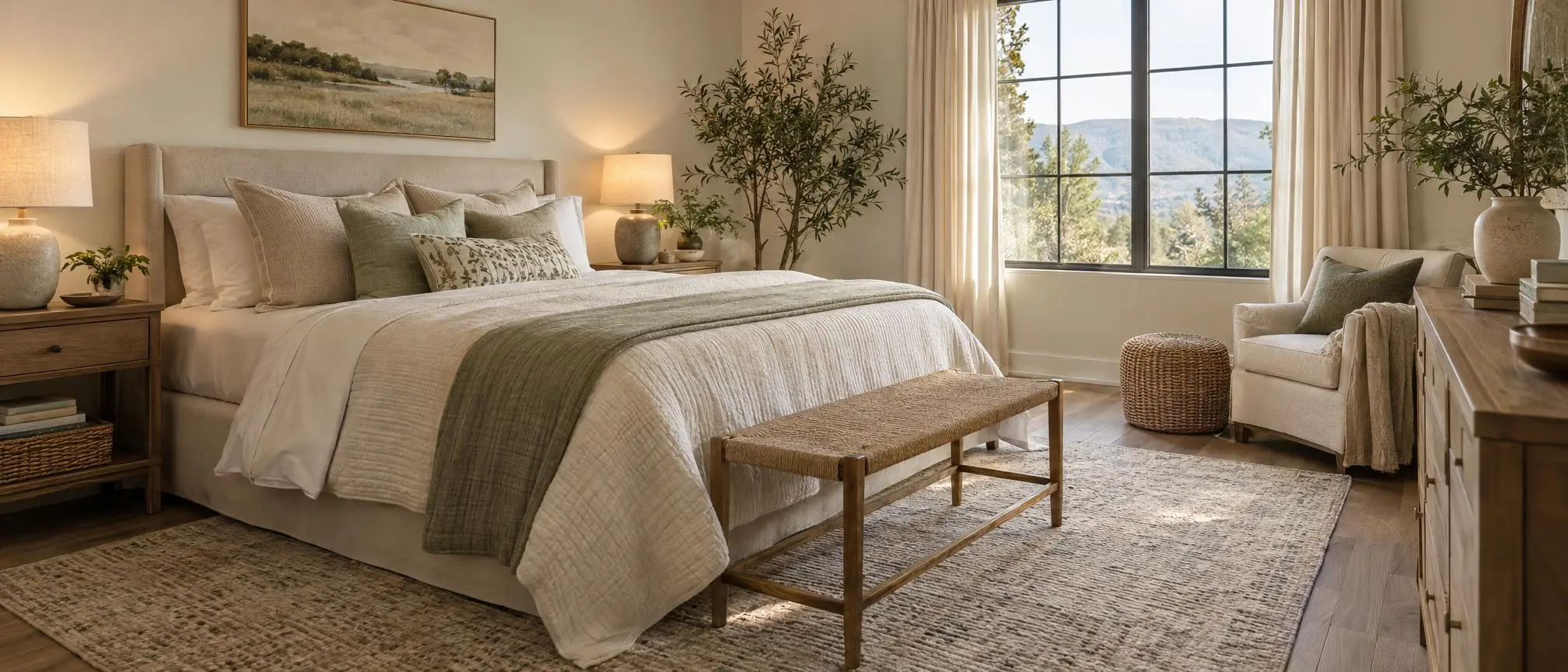
When you’re trying to figure out how to best decorate your guest room, a great way to do so is by having clean bedding, some comfy pillows, and maybe another layer like a quilt or throw. Having multiple layers can make the bed look deeper and can give your guests choices about whether they want more or less warmth at night.
Guests do not need to move a large number of pillows from the bed prior to bedtime. Avoid placing too many decorative pillows on the bed.
A simple, well-made bed is usually much more inviting than an over-decorated bed.
Choose a Calm Color Palette
Color is key when guest room decor as color has a large impact on the mood or feel of the room.
Warm neutrals (like soft whites, creams, beiges, taupes, light grays, and subtle earthy shades) provide an inviting and tranquil environment for you to relax.
If you’re thinking about decorating a guest room, there are several color options that will add some subtle color. Some examples include: Sage Green Dusty Blue Muted Terracotta Soft Olive Gentle Clay
These shades add personality without becoming overwhelming.
You can also use darker colors for accenting. Colors like deep green, charcoal, navy, or warm brown will help provide visual depth to your room, especially when used in conjunction with light colored bedding and good lighting.
A key element in creating a cohesive design is being consistent. Select a small range of colors and use these colors in your bedding, wall art, area rug, window treatments and other smaller decorative items.
Use Comfortable and Simple Bedding
The way your guest room decor will be influenced by many things, including the types of bedding you choose to purchase. This is because guests will have various sleeping habits and will therefore require different types of bedding.
Begin by providing fresh, comfortable bed sheets, and ensure that there are sufficient pillows to provide adequate neck and head support.
In order to create a useful and functional guest room decor plan, provide guests with another blanket so they will be able to locate it quickly, instead of placing all of your extra items in a far away closet.
Layering is also helpful, as it allows guests to adjust their bed linens based on temperature.
You may want to consider a basic bed set-up that includes sheets, a light weight blanket or quilt, a primary covering (such as a comforter), sleeping pillows, and possibly some decorative pillows.
Keep the overall styling neat rather than complicated.
Guest bedrooms should communicate comfort first and decoration second.
Create Layered Lighting
When choosing how to a guest room decor, you must take into consideration the type of lighting that will be used.
One bright ceiling fixture rarely provides everything a visitor needs.
The addition of a more comprehensive lighting design for decorating a guest room includes both overall room lighting and softer, more gentle bedside lighting.
Guests can use their bedside lamp to read or illuminate their room during the evening hours instead of using an overhead light which would be too bright.
If you can reach either side of your bed, it may be beneficial to install lighting on each side of the bed.
Consider natural light as well. While you want your windows to let in some natural light, they should also provide a level of privacy that is suitable for the space.
Warm, soft lighting can greatly enhance the appeal of a plain guest room.
Provide Useful Bedside Surfaces
Practical surfaces are often overlooked by individuals who are attempting to learn how to design a guest room; however, these practical surfaces will greatly enhance the overall level of comfort.
Many times people need to store items like a cell phone, glasses, a book, a glass of water, and other small personal items.
A bedside table does not need to be large.
Where there are limitations to your floor area, you can achieve the same results with either a narrow table, a compact shelf, or an appropriately-sized surface.
Try to keep most of the bedside area clear.
Most people will be satisfied with one lamp, and a single small decorative item on their bedside table. If you put too many items on the surface of your table there will not be any space left for the guest to place their things.
Include Storage for Guest Belongings
When a guest room decor, especially one where guests will be staying for multiple days, storage is a key factor.
A guest bedroom should ideally provide at least a small amount of empty storage.
When deciding what type of decor to use when a guest room decor, don’t use up all the space on the shelves in the closets and in the drawers of the dressers with your items.
By leaving a single drawer open, placing hangers in a closet, and/or clearing out some space in your wardrobe, you can provide your guest with the opportunity to unpack and not have to live out of their suitcase for the duration of their visit.
Wall hooks are an excellent way to create extra storage space for items such as coats, bags, hats, and other types of clothing without requiring a lot of floor space.
With small bedrooms, using the space under your bed to store things will allow you to hide all of those extra items from view and leave the rest of the room free of clutter for visitors.
The room should communicate that visitors have permission to use the space.
Use Window Treatments for Comfort and Privacy
Window coverings have an aesthetic function and also a functional purpose in decorating a guest room.
Guests need to have peace of mind when they change their clothes or sleep that no one will see them from the outside.
Planning the decoration of a guest room involves providing for privacy and controlling the amount of natural light that enters the space.
Sheer curtains can help to reduce glare from sunlight during the day, however, they may not offer enough privacy at night.
As far as which type of window treatment is most appropriate for each individual window and surrounding area, there are several different types available. Some examples include curtains, blinds, shades, and even layered window treatments.
Bedroom darkness also affects sleep.
A better way of blocking out light if there is a lot of outdoor light will allow your guests to sleep better.
The most effective way to select window coverings is to choose something which coordinates with the room, not something which competes with either your bed linens or walls.
Add Wall Art Without Overdecorating
Wall art is an excellent way to give personality to your guest bedroom without taking up any precious floor space.
In addition to making a room look complete, you may want to include art, photos, textiles, or other simple decorative items.
A great way to create a good design for decorating your guest room walls is to use some thoughtful arrangements of items, rather than just filling up the entire space with them.
One large piece above the bed can create a focal point.
Alternatively, two or three smaller coordinated pieces can work well.
To help ensure that your guests feel at home, try to avoid displaying images that are overly personal or might cause discomfort. Since your guest room will be used by many people, it may be better to choose art that has a wide range of visual appeal.
These types of images include natural settings, abstract patterns, landscapes, buildings/architecture and subtle designs.
Add a Rug for Warmth and Texture
The type of flooring you choose for your guest bedroom is important to consider as you begin to design and furnish it. Guest bedrooms should have a comfortable feel under foot.
A rug adds texture, design, color, and warmth to a room, especially when that room has a hardwood floor.
For an effective, well-balanced approach to creating a guest bedroom design, select a rug that relates to both the bed size and the overall dimension of the room, as opposed to selecting a rug that is visually too small for the space.
The pattern should also coordinate with other visual elements.
A more subdued rug might be more appropriate if the bedding or wallpaper you are using has a very pronounced pattern.
In an otherwise neutral room, a rug can be a subtle way to introduce color and/or design.
Edges should be placed such that it is difficult for guests to fall over while walking into the room, and also as they walk about.
How to Small Guest Room decor
The way that you can create a comfortable guest room decor has changed due to the limited amount of space available, however this does not mean that you cannot create a comfortable guest room.
In a compact room, every piece should have a clear purpose.
The most effective way to decorate a guest room with limited space is by focusing on the bed, bedside functionality, lighting, and storage; and then removing any non-essential furniture.
Use vertical wall space instead of filling the floor.
You can save space on your wall by installing a shelf, hooks, and/or small lights near your bed.
Light and medium colored walls may create a visual opening in the room if they are accompanied by adequate natural light.
Mirrors can also reflect light and create a greater sense of depth.
Do not use excessively large furniture just because you can fit it in your space.
A little empty space often makes a small bedroom feel more comfortable.
Design a Multifunctional Guest Room
Many households don’t have enough space to use as a guest room. Therefore, the way we design a visitor’s room may include designing a multi-functional space.
The space is a multi-functional area that can be used for a home office, hobby area, reading nook, or just as a general family living area.
Keep the space visually structured during daily activities so that it functions effectively as a multi-purpose environment.
For instance, a desk can be left in the guest room, however, it is important to clean up and organize any excess paper and/or cables prior to the arrival of your guests.
Storage hides work items to help make a guest bedroom feel like an overnight stay.
Furniture that serves multiple purposes may be helpful, however, do not create a room where you will have to make major adjustments to the layout each time a guest arrives.
The transition from everyday room to guest bedroom should be relatively easy.
Think About Privacy
Privacy is a key consideration when designing a guest room, as guests will be residing within another person’s home for a short period of time.
The door to the bedroom should be shut properly, and window coverings should provide enough privacy.
Another useful consideration is sound.
Thick draperies, floor coverings, plush bedding, and upholstered furnishings are effective at reducing the amount of sound bouncing around a space.
You don’t need to do full sound proofing. However, softer materials will help create a more relaxing environment for your bedroom.
It is best to try and limit what you put in the guest bedroom that your family will need to get out of often when guests are visiting.
When guests feel like no one is going to come into their room, they will be more relaxed.
Add Thoughtful Personal Touches
When you are thinking about decorating a guest room, the details can help to make the experience more enjoyable for your guests. However, you should use those details sparingly so that they don’t clutter the space.
The addition of books, greenery, a small flower pot, an ordinary clock, additional linens, or even a spot for your jewelry can give the appearance that you are more thoughtful.
How to create a stylish, successful guest bedroom is not about filling every surface with a decorative item.
Guests bring their own belongings and need somewhere to put them.
Leave part of dressers, tables, shelves, and countertops empty.
In addition to being able to answer general questions about the property, you should also provide some basic information regarding what amenities are available to guests. The goal here is to help limit the number of times a guest has to ask you for help with things that could easily be provided in advance.
Common Guest Room Decor Mistakes
Another way to learn how to design a guest room is by understanding the most frequent errors made when designing a guest room.
A major problem with this approach is that it allows the room to be used for storing household items indefinitely.
A guest who sleeps next to boxes, unused furniture, or over-stuffed closets will likely think that he/she is staying in a storage room instead of a ready made guest room.
Another common way people make mistakes when decorating a guest room is by being too concerned about what it looks like rather than how well it functions.
Even though the room looks great, it will be uncomfortable for guests if they cannot find a place to plug in their cell phones, hang up their clothes, set down their luggage, or turn on the bedside lamp.
Overdecorating is another issue.
The addition of too many pillows, decorative items, patterns with high contrast, scents/fragrances, and other accessories will create a sense of clutter within the room.
In addition to being able to ignore the temperature, depending on what time of year it is, you could provide your guests with an additional blanket or give them some control over how much air they have.
Finally, create an environment that does not make your guests uncomfortable with the level of privacy in the space. Family photos can provide a sense of warmth and welcome to the area, however, items that are very personal should usually be put away in another location.
Make the Guest Room decor Feel Like Part of Your Home
A guest room decor should have its own relaxed environment, however, it should not appear to be an entirely different part of the home.
Creating a sense of visual flow is possible when there are many elements of design that share similar qualities (wood tone, color, finish on hardware, style of art, textile).
In cases where your home is primarily modern, the guest bedroom can have a more subtle form of the same design.
When the home has a rustic or traditional feel, try to incorporate those types of materials into the bedroom, however, keep from making the bedroom too overwhelming.
Consistency makes your room look like it was designed with purpose instead of being a collection of used furniture.
Create a Comfortable Place for Luggage
Suitcase location can seem like a small item, however; it will impact how well the whole space works.
Visitors are best served by having a location other than their bed or floor to set down their luggage.
A bench at the end of the bed can work when there is enough space.
A low-profile surface that is stable, a designated storage area (rack), or an open area of your workspace can serve the same purpose.
Very small rooms can simply maintain a clear floor space to hold luggage, which would be beneficial.
Avoid filling every corner with decorative objects.
Guests need temporary space for their own belongings.
Use Mirrors Strategically
Mirrors can improve both functionality and visual space.
Guests can find it useful to have access to a mirror during the preparation for their day, especially if they are using a common bathroom.
A wall mirror also reflects light and can help a small bedroom feel brighter.
Mirrors should be positioned thoughtfully instead of automatically placing them on a wall directly across from your bed.
Consider what the mirror reflects.
The visual appearance of a room can be improved by adding a mirror to reflect a window, artwork, or other pleasing area of the room.
Keep Decorations Easy to Maintain
The use of the guest room is limited to occasional visits, therefore some of the decorative items on display may accumulate dust.
Choose surfaces and accessories that are reasonably easy to clean.
A complex arrangement with many small decorative elements will appear visually appealing after it is styled. However, this type of arrangement requires ongoing maintenance.
A small number of large items can look less chaotic and require less effort to maintain cleanliness.
Prior to guests’ arrival, clean bedsheets, wipe down all exposed surfaces, verify functioning of bedside lamps, and ensure that closets/drawers are accessible for storage.
A clean room has a greater impact than expensive-looking decoration.
Consider Different Types of Guests
A flexible guest room can accommodate different visitors over time.
Older guests may appreciate clear walking paths and easily accessible lighting.
Visitors staying several nights benefit from storage.
A person who works from home will likely prefer to have a clean workspace with a comfortable chair, assuming there is a desk present within the workspace.
Families may need slightly different arrangements depending on who is visiting.
You do not need to prepare for every possible situation permanently.
Instead, create a simple foundation that can be adapted when required.
How to Make a Guest Room Feel Cozy
Coziness usually comes from layers rather than excessive decoration.
Soft bedding and warm lighting, combined with curtains, a soft area rug and natural elements will create an inviting atmosphere.
Visual warmth is provided by wood, woven materials, linen-like fabric, cotton, upholstered furniture with a soft feel, and muted colors.
Avoid making everything identical.
Slight variations in texture and tone create a more natural, relaxed atmosphere.
A room can remain simple while still feeling warm.
How to Make a Guest Room Feel More Spacious
Begin by removing unnecessary objects.
Creating clear paths is more effective than creating space using decorative methods.
Use furniture that fits the actual dimensions of the room.
Curtains positioned to emphasize window height can draw the eye upward.
A cohesive color palette can also reduce visual fragmentation.
Where feasible, maintain an unobstructed view of the floor and do not place many small furniture items throughout the space.
One useful storage piece is often better than multiple tiny units.
Preparing the Guest Room Before Visitors Arrive
Decorating is only part of creating a welcoming room.
Check to make sure that the bed linens are clean, all of your lights are working, you can open and close your window treatments easily, and there is some form of usable storage prior to having people stay in your home.
Remove household clutter from visible surfaces.
Check the floor, bedside tables, mirrors, and other commonly touched areas.
Provide extra bedding somewhere that can be found easily.
Make sure your visitors know which storage areas they may use.
The effectiveness of a well-designed bedroom increases greatly with adequate and proper preparation of the space.
Final Thoughts
A successful guest room balances comfort, practicality, and personality.
After you have established an environment where your guests can rest, see what they are doing, be private, store their items, and move around easily, only then begin to add decor (artwork, fabric, rugs, plants, etc.).
Do not try to fill every wall, shelf, or surface.
Guests will typically appreciate empty space since they have brought their own clothes, luggage, electronics, and personal belongings.
In addition, the space needs to relate to other areas within your house, and it should not appear as if you are trying to make a completely different type of design statement.
Most importantly, think about hospitality instead of perfection.
A clean bed, accessibility of light, practical storage, privacy and a peaceful environment are usually more important than a complexly decorated room.
Even if you have a small guest room, when you use a consistent color scheme and take time to consider how to decorate it, your guests will find it to be a comfortable environment where they can spend quality time.
Frequently Asked Questions
What should every guest room have?
A well-appointed guest room has comfortable sleeping arrangements, adequate lighting, privacy, a small table next to the bed, space to put your suitcase, and space to store clothing and other personal items. Additional bedding such as extra blankets and accessible power sources would be beneficial.
What colors are best for a guest bedroom?
Warm neutral shades, subtle green hues, soft blue tones, gentle gray shades, cream colors, and earthy tones are suitable choices for a quiet environment. When used in conjunction with light-colored surfaces and proper illumination, dark colored areas may serve as accent pieces.
How can I make a guest bedroom look welcoming?
Get rid of clutter, then put on fresh linens. Create a warm ambiance with lighting, add a cozy rug, display a simple piece of art, hang curtains, and select a few tasteful decorations. Keep some of the surface areas clear for guests to place their personal items.
How do I decorate a small guest bedroom?
Prioritizing your most important furniture, using the walls to store things, buying appropriately sized furniture, and keeping the path clear for walking around will help you make a small bedroom appear larger. Additionally, using light colored paint on the walls, adding a mirror to the room, and having adequate lighting can also create the illusion of a bigger space.
What should I put on a guest room nightstand?
Keep it simple. It’s usually better to have a single light and adequate surface area to place your phone, glasses, books, etc., than to have many different types of decorations.
How can I make a guest room feel like a hotel?
Focus on being clean, having comfortable layered bedding, having lights next to your bed, providing privacy, organizing your storage, keeping your surface area clutter-free, matching the colors in your room, and having a place for you to put your bags and other personal belongings. Your objective should be convenience and consistency; not to copy the exact style of some hotel.
Should a guest room have a television?
It’s up to you. A comfortable guest bedroom doesn’t need to have one. The decision of whether or not to have one will depend upon the size of the room, who your average guests are, and what role you would like the space to play in your home.
How much storage should I leave for guests?
Even a little can go a long way. Visitors will be more comfortable with extended visits if they are provided with some empty drawer space, a few hangers, a small section of closet space, wall hooks or an empty shelf.
How can I decorate a guest room that is also an office?
Store your work supplies in a closed container, and create a distinct separation of the space for working versus sleeping. In order to avoid having too many items in the room during guest stays, try not to allow papers, cords, or equipment to take over the area.
What should I avoid in a guest room?
Avoid overcrowding with too many decorative pillows, bad lighting, blocked electrical outlets, full closets, strong smells, hard to navigate walkways, and placing decorative items on surfaces where guests will want to place things.