Interior Design Styles: 10 Popular Kitchen Looks Explained

Understanding different interior design styles can help you create a functional and inviting kitchen tailored to your lifestyle. Your kitchen is more than a space for cooking; it is often the heart of family gatherings, daily conversations, and routines. Choosing the right layout, materials, and overall aesthetic ensures a perfect balance between form and daily usability.
Understanding the different forms of interior design can allow you to design a kitchen that reflects how you live and makes it easy to do what you need to do every day. Most types of interior design utilize straight lines and straightforward items. Some forms of interior design utilize natural materials, traditional designs, and bright colors. Every person has a different idea of what form of interior design fits best in their home.
An optimal design includes a proper mix of form and function. Along with colors and decorations, some of the critical features of a good design include: cabinet storage; proper lighting; adequate work surfaces; and the path that people take through the area. The following article details ten of the most popular types of kitchen designs, their characteristics, and how to choose the right type of kitchen for your needs.
What Are Interior Design Styles?
The interior design styles is an identifiable method of organizing and designing interior spaces. These methods combine color, materials, shapes, textures, furniture, and decorative elements to form a cohesive visual appearance.
Kitchens have many options to choose from such as cabinets (doors), countertops, backsplashes, floors, lights, chairs/seating, and other accessoriesFlat cabinet fronts, clean lines, and minimal ornamentation create a modern or minimalist kitchen look. Conversely, natural wood, traditional elements, and comfortable furnishings define rustic or farmhouse styles.
Guidelines offer helpful structure, but interior design involves no rigid rules. Two kitchens featuring identical floor plans and functions can maintain completely different appearances.
In addition to distinguishing between style and layout, you need to understand how the two differ. Layout refers to the placement of work areas, cabinetry, and equipment. Style is the look and feel of the layout. A small galley layout accommodates either traditional or modern styling while maintaining the same structural footprint.
1. Modern Kitchen Style
Early design philosophies prioritizing simplicity, functionality, and utility shaped modern interior design. Straight lines, open food preparation areas, basic geometric shapes, and minimal material variety define this style.
Cabinet doors are generally straightforward in design, but are minimally adorned. The color palette of cabinet doors can vary from white, black, gray to natural wood. Additionally, the use of glass, metal and/or smooth surfaces will enhance the overall aesthetic of the cabinet doors.
Prioritize smart storage during kitchen design to keep countertops clear and maintain an appealing look. Proper cabinet organization keeps daily items accessible while preserving a spacious feel.
Interior design styles suit residences of any size. Compact layouts achieve visual cohesion through continuous cabinet lines and unified color schemes. Every room element should serve an aesthetic or functional purpose.
2. Contemporary Kitchen Style
Interior design styles is a specific type of design movement. However, contemporary design is based on the design concepts and styles that are popular during a certain period of time.
The modern kitchen can have both simple cabinets and curved shapes. The kitchen can also include different types of surfaces (textures), low light levels, and/or unusual colors. How a kitchen looks can be changed as people’s tastes in design change.
Soft neutral colors and natural wood balance modern sleekness. Alternatively, darker cabinets, unique lighting, and custom backsplashes create dramatic visual impact.
Modern kitchens follow no rigid rules. Contemporary designs integrate modern materials and functions seamlessly. Today’s kitchen design is defined by how today’s modern materials, designs and functions are integrated into a single kitchen space.
You want to have an even outcome, so select a couple of complementary features rather than each surface being the most important. Keep in mind that having usable storage and easy access will be your top priority.
3. Minimalist Kitchen Style
Thoughtful cabinet selection, careful surface treatment, and minimal decorations achieve a clean minimalist kitchen style.
Commonly found neutral colors include: white, beige, light gray, and subtle earthy shades. Flat-front cabinets, basic hardware, and uncluttered countertops provide an orderly appearance.
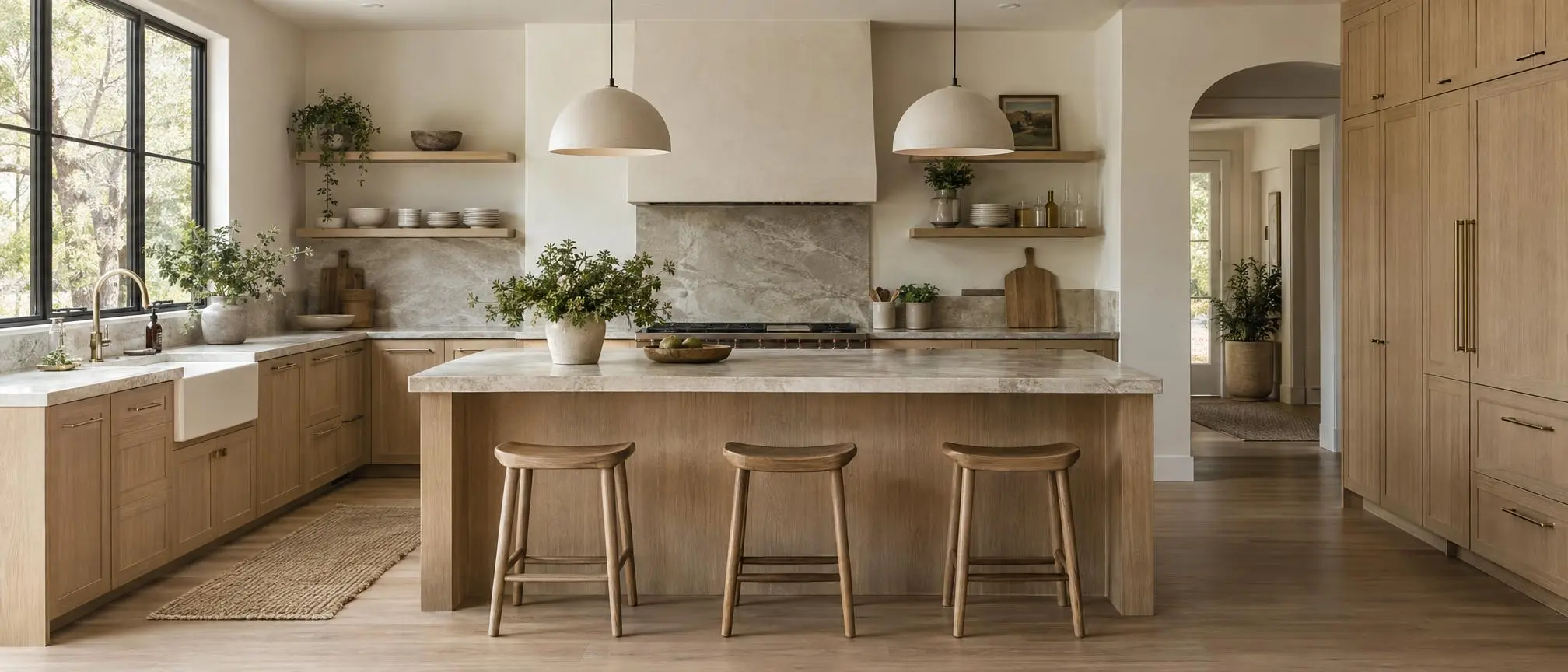
The goal of being minimalist in the kitchen doesn’t require a cold and empty space. There are multiple ways that you can have a cozy feeling in your kitchen. Natural wood cabinet finishes, textured wall materials, soft ambient lighting, and subtle color variations enhance coziness.
The process of designing a storage area is essential. Store daily kitchen utensils within easy reach yet out of sight. Keep essentials accessible while maintaining a clean, uncluttered countertop appearance.
Of all the different types of interior design, minimalist is the best type if you would like to create a tranquil environment free from the distraction created by excessive decoration. You should be able to eliminate non-essential items in your room while creating a functional and comfortable area.
4. Scandinavian Kitchen Style
Clean lines, organic materials, functional storage solutions, and optimal lighting define Scandinavian interior design. Pale wood construction, light-colored cabinetry, clutter-free layouts, and cozy elements characterize kitchens built in this style.
White and soft neutral colors are great for reflecting sunlight, especially if a room does not have much natural light. Using wood, woven materials and plants will keep your room looking interesting and not too simple.
Functional design is at the heart of my design philosophy.Storage must remain readily accessible, work spaces need a clutter-free design, and daily kitchen essentials require placement in easily reachable areas.
A Scandinavian-style kitchen can have other colors besides white. You may use muted greens, warm beiges, soft blues, and natural wood to give your kitchen character and interest while keeping the overall feel of the kitchen simple.
This style suits families seeking bright, functional, and inviting spaces. Simple layouts also create an illusion of space in smaller kitchens.
5. Farmhouse Kitchen Style
Traditional rural architecture heavily inspires the classic farmhouse look, utilizing natural materials, soft warm tones, traditional cabinetry, and comfortable furnishings.
Wooden finishes, cabinet doors with frames, open shelving and simple ornamental pieces will enhance this style. Cream, warm white, soft greens and earth tones are most frequently used.
When the material used to build something looks like it was made to be together, the design is most effective. Mixing different types of woods with subtle finish options creates a relaxed atmosphere without making the space seem unfinished.
In a farmhouse kitchen, you need to think about storage as much as anything else. Because you may have a lot of things on display that are decorative, they can take up a lot of space on your counters.
Make sure you keep those kitchen utensils/appliances/tools that you use most often handy. Also, try to keep your open shelves clean, so that you don’t crowd them too much.
The way that farmhouse interior design differs from other types of interior design is that it has a relaxed, used look.
Modern homes blend traditional country style by incorporating cleaner lines and fewer decorative details, maintaining a warm and welcoming atmosphere.
6. Traditional Kitchen Style
Traditional kitchens take their design cues from the established architectural and decorative styles of the past. These types of kitchen can include such features as framed cabinet door panels, decorative trim work on the walls or ceiling, a symmetrical layout, and traditional building materials.
The selection of colors used for the color palette will typically include cream, warm whites, and various shades of wood that enhance the architecture of the home. Decorative elements will provide a sense of dimension and visual appeal, especially when applied within large spaces.
Traditional interior design styles isn’t just about over-the-top ornamentation. By creating a understated layout of your cabinetry components, using naturally-occurring materials, and coordinating the finish of each component you can achieve an enduring aesthetic.
This approach could be most appropriate for older homes that already have existing architectural features. The use of a kitchen design that matches the architectural style of the other spaces within the home will allow for all of these areas to come together as one cohesive space.
A possible problem could be “visual weight.” A dark color finish on furniture or walls along with many decorative elements can give a small space the appearance of being too full, therefore, lighter colored materials and proper lighting could help.
7. Rustic Kitchen Style
Rustic design is about using natural materials, having exposed textures and feeling connected to nature through a casual way. In a rustic kitchen you can have things like wood grain on cabinets, stone for countertops, textured finishes on walls and/or ceilings and earth tone colors.
Brown, sand, charcoal, muted green, and warm cream can be used to complement these materials. In contrast to creating a flawless, pristine look, rustic interiors typically leave the organic qualities of each surface on display.
The home where you will install the product will determine the look of your kitchen. If you are going for a rustic, traditional look then you can incorporate some of the features from this type of kitchen such as exposed beams and larger wooden pieces of furniture.
On the other hand, if you want a more modern or contemporary feel, you can use a limited number of natural materials along with simple cabinets.
When selecting finishes, consider practical maintenance. Areas where you cook have moisture, heat and constant cleaning. Materials used in these areas must match the requirements of how they will be used.
Among the most popular interior design trends is “rustic” design. This trend has been successful because it creates a warm, inviting environment that can be used for living.
To create a successful rustic space you need to find the right balance of material textures, adequate lighting, practical surface areas, and convenient storage options.
8. Industrial Kitchen Style
Industrial interior design styles is inspired by Workshops, Factories and Converted Warehouse Spaces. Kitchens designed with an Industrial Design theme may include exposed bricks, metallic accents, concrete-like finishes, visible architectural components and straightforward cabinetry designs.
The color scheme typically includes gray, black, brown, and natural metal colors. Softening the harshness of the metals with wood can help make sure the space doesn’t feel too cold.
Commercial kitchens are often designed to be functional and easy to build. While many commercial kitchens use open shelves for commonly used utensils, closed shelving provides more protection from the effects of grease and dust created by cooking.
Lighting can enhance the visual appeal of a space. Pendant lights that are simple in design and task lighting that is functional will help emphasize the industrial nature of the space, while improving visibility during food preparation.
The approach will work best if you have a building that has some form of existing architectural detail, such as exposed brick, high ceilings, or unique structural elements. If you are creating this style in a standard home, then adding several well-placed textures should be sufficient to create the feel of the style while still being able to see most of the space.
9. Coastal Kitchen Style
Coastal style is inspired by coastal living, natural lighting, and an overall relaxed atmosphere. The use of light color palettes, organic textures, and materials that produce a sense of openness and airiness are typical features of this type of interior design.
Most people choose colors like white, light blue, tan, and light green. You may find that you want to add some interest to the space by using natural woods, textiles, and patterns. These will create a visually interesting environment while still keeping the look simple.
A coastal-style kitchen can use other methods besides using nautical decor. Express coastal style through color, light, and natural materials rather than relying on seashells or anchors.
The use of window coverings and proper lighting will allow you to maximize your natural light. Additionally, using a single color scheme throughout a small room along with a minimal amount of decorative items, will create an illusion of space in your kitchen.
Coastal style is for those that want to create a relaxed atmosphere that has a light look. However, the successful execution of coastal style will rely heavily on creating sufficient storage space, using long lasting materials for countertops and flooring, as well as developing a kitchen layout that allows for easy food preparation.
10. Transitional Kitchen Style
Transitional design unites traditional and modern elements, offering a middle ground for individuals seeking timeless appeal alongside contemporary simplicity.
A transitionally styled kitchen is composed of many different types of elements, for example, framed cabinets that are clean lined, neutral colored and textured with wood or stone. Additionally, the cabinets in this type of kitchen would typically be a more traditional size, however they would also feature a subtle amount of light.
The goal is to find equilibrium, rather than strictly follow a single style of decoration. All of the decorative items added to the space must complement the functionality of the room, as opposed to conflicting with the functional requirements of the room.
The use of the same color palette across two distinct spaces with differing design styles can prove beneficial.Restricting finish options per space establishes a consistent home-wide appearance.
How to Choose the Right Kitchen Design Style
Choosing between different interior design styles becomes easier when you begin with the needs of your household rather than a photograph you admire.
First, assess the room itself. Consider its size, ceiling height, natural light, existing architectural details, and available storage. Some designs work naturally with a building’s features, while others require more careful adaptation.
Next, think about your everyday routine. A household that cooks frequently may need generous work surfaces and accessible storage.
A kitchen used mainly for quick meals may prioritize open circulation and a comfortable place to sit.
Create a simple visual plan using a small selection of colors, materials, and reference images. Look for common features instead of collecting ideas that have little in common.
It is perfectly acceptable to combine influences. You might prefer Scandinavian simplicity with rustic wood, or transitional cabinetry with contemporary lighting. Choose one dominant direction and introduce secondary elements carefully.
Finally, consider maintenance. Glossy surfaces, textured finishes, open shelves, and natural materials can require different levels of care. A successful kitchen should suit the way you live, not simply look attractive when newly decorated.
Common Kitchen Design Mistakes to Avoid
A typical error when designing your kitchen is to select its design first and then think about how it will work. Although you have a lovely looking kitchen, you will likely be annoyed if the drawers are hard to open, there isn’t enough space on your countertops, and you can’t easily get to things that you use every day.
The first issue with an overly-decorated room is that there are simply too many different elements competing for attention.
If you have multiple prominent patterns, varying finishes, and many decorative items, then your room will look very busy. Generally, using a limited number of materials and colors will create a much more unified appearance.
Lighting needs to be considered. The single overhead light will likely fall short of being able to illuminate all tasks. General lighting, focused task lighting, and softer mood lighting are each used for various applications.
Remember to take into consideration how you will store and transport items. Cabinets need to be accessible, you need to keep pathways clear and your doors/drawers should be able to open easily.
Interior design styles that work best with the way you live in your home will be the most successful. You don’t have to incorporate all of the aspects of an interior design style to have a home that feels thought out, comfortable, and neatly arranged.
Frequently Asked Questions
What are the most popular kitchen design styles?
There are several major styles of interior design including modern, contemporary, minimal, Scandinavian, farm house, traditional, rustic, industrial, coast side, and transition. Each of these styles has its own characteristics, and each individual will find that he/she prefers one or more of these styles based on his/her personal preferences.
What is the difference between modern and contemporary design?
The term “modern design” refers to an era of design in which designers produced designs with a specific design style. Conversely, the term “contemporary design” represents what is currently trendy. Since color, material, and shape continue to evolve, the appearance of contemporary interior designs will also evolve.
Can you combine different kitchen design styles?
Yes, it is possible to combine multiple styles to form a distinct and individualized space. To start, select an overriding aesthetic style and then incorporate additional complementary elements (such as natural wood, traditional cabinet details, and modern lighting) into that style.
Which kitchen style works well in a small space?
Because both minimalist and Scandinavian designs use simple elements, allow for a lot of natural light, and emphasize the function of a space through its organization, both styles of design can be very successful. However, in order to make either type of design work well, it is important to take into account how you will store things, what type of lighting you have access to, and how your space is laid out.
How do I make a kitchen feel timeless?
Coordinated colors, smart storage, durable materials, and functional layouts facilitate daily activities. Reflect personal style through simple updates instead of following fleeting trends.
Does kitchen design style affect functionality?
The visual appearance of a product will be most heavily influenced by its style. However, the materials that make up the product and how it is stored can also have an effect on how functional the product is in everyday use. As a result, when you develop your strategy, you should think about both what makes the product visually pleasing and what makes it practical.
Conclusion
Having a knowledge of the different interior design styles of kitchen design, you can make decisions on which colors, materials, cabinetry, lighting, and decorative elements will work well with your house. Each style has a different mood and feel (from simple minimal design to cozy country kitchen to transitional design).
The most effective choice will be one that complements the other areas of your home, supports your daily routine, and provides long term comfort.
By considering what is currently in the room (architecture), the amount of available space (size of the room), the items that require storage (storage needs) and your preferred style (personal preferences), you can design a kitchen that appears to belong in your home and also functions efficiently.
Rather than being limited to the design of the entire space, use this list of ideas as a starting point. Then, select those items that would work well in your home and combine them in unique ways to design a space that is representative of your personality.