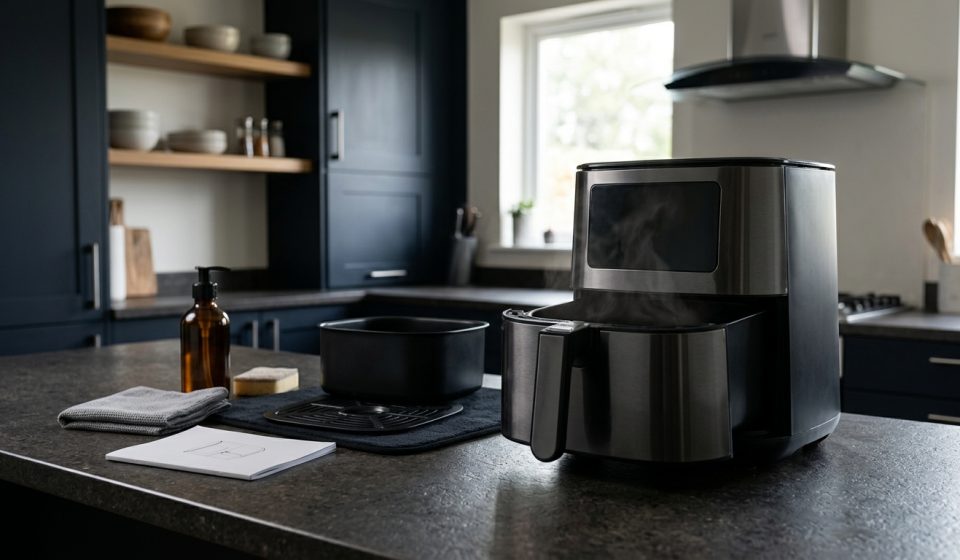

You unbox a new air fryer, switch it on, and a few minutes later the kitchen smells like hot plastic. It is unpleasant enough to make you wonder whether the appliance is defective — or whether you should put food anywhere near it.
The short answer: a mild plastic or “new appliance” smell during the first few uses can be normal. A strong burning, smoky, electrical, or worsening smell is not something to ignore.
Some manufacturers acknowledge that plastics, coated cooking surfaces, manufacturing residue, or materials heating for the first time can produce a temporary odor. That smell should become weaker rather than stronger as the appliance is cleaned, aired out, and used according to its manual.
The important part is knowing which smell you are dealing with.
Why Does a New Air Fryer Smell Like Plastic?
A brand-new air fryer contains materials that have never been through repeated high-temperature cooking cycles. When they heat for the first few times, you may notice an unfamiliar plastic-like or chemical odor.
For example, Philips says plastic components and coated cooking parts in some of its air fryers may release an odor during the first uses as the appliance reaches high temperatures. COSORI similarly describes a mild first-use odor as something that can occur with a new appliance.
That does not mean every plastic smell is harmless.
A normal first-use odor should generally be mild, should not come with sparking or melting, and should improve after proper cleaning and use. A smell that is intense, smoky, electrical, or becoming worse belongs in a different category.
Before You Cook: Use This First-Use Routine
Do not start by throwing fries into a brand-new air fryer. Give the appliance a proper inspection and cleaning first.
- Remove every piece of packaging. Take out plastic film, cardboard, foam, stickers, tape, zip ties, and any inserts around or underneath the basket. Check inside the drawer and cooking cavity as well.
- Wash the removable parts. Clean the basket, crisper plate, tray, and other washable accessories with warm water, mild dish soap, and a soft sponge. Rinse them thoroughly so no soap residue remains.
- Dry everything completely. Do not reinstall wet parts and immediately heat the appliance.
- Wipe the cooking cavity gently. With the air fryer unplugged and cool, use a damp soft cloth where your manual permits. Avoid abrasive pads, metal tools, and spraying cleaning chemicals directly into the appliance.
- Ventilate the kitchen. Open a window or use the kitchen exhaust fan during the first heating cycles.
- Follow your model’s first-use instructions. If the manufacturer recommends an empty heating cycle, use the temperature and time stated in your manual. Do not assume that another brand’s burn-off routine is appropriate for yours.
Philips, for example, recommends a food-free heating cycle to reduce plastic odor on certain models, while COSORI advises following the specific first-use instructions for the appliance rather than repeatedly running long high-temperature cycles.
Afterward, let the air fryer cool and smell it again. What matters most is the direction of change: the odor should be fading, not getting stronger.
If an Older Air Fryer Suddenly Smells Like Plastic
A plastic-like smell from an air fryer you have owned for months deserves more investigation.
Do not immediately assume the machine itself is melting. Start with the things that commonly get reheated inside it.
Check for grease and food residue
Old grease, crumbs, splatter, and burnt food can produce surprisingly sharp odors when reheated.
Remove the basket and tray, then inspect the drawer, corners, underside of the crisper plate, and the area around the heating element.
Philips recommends cleaning food residue from the heating element only after the appliance is unplugged and completely cool, using a soft sponge or an appropriate soft-to-medium brush rather than abrasive tools.
Check the liner
Parchment paper and other liners can become a problem if they move into the heating area or interfere with airflow.
Loose parchment should never be left in an empty air fryer where the circulating air can lift it toward the heating element. Philips specifically warns that loose baking paper can be pulled into the heater and begin to burn.
Also remember that liner guidance varies by manufacturer. Some brands allow certain types of parchment or foil when used correctly, while others recommend against them for particular models. Your appliance manual wins.
Check accessories and foreign objects
Look for anything that does not belong inside the cooking chamber: packaging fragments, a bread clip, damaged silicone, a piece of plastic wrap, or an accessory sitting too close to the heating element.
If anything looks melted or heat-damaged, stop using the appliance until you know what caused it.
Check for cleaning residue
Too much dish soap, incompletely rinsed parts, or an unsuitable cleaning product can create a chemical smell once the appliance heats up.
Rinse removable parts thoroughly and allow them to dry fully before testing the air fryer again.
What Not to Do to Remove the Plastic Smell
This is where internet advice gets unnecessarily creative.
Do not automatically heat bowls of vinegar, lemon juice, or other acidic mixtures inside the air fryer. COSORI specifically cautions that acidic odor-removal methods may not be suitable for every coating, seal, material, or accessory. Unless your own manual approves the method, stick to mild dish soap, water, proper rinsing, drying, and ventilation.
Also avoid:
- Steel wool or metal scrapers
- Abrasive powders
- Bleach
- Oven cleaner unless specifically approved by the manufacturer
- Spraying cleaner directly into the heating area
- Repeated long maximum-temperature cycles back-to-back
- Opening a sealed electrical housing to investigate the smell yourself
The goal is to remove residue, not create a second problem while solving the first.
When a Plastic Smell Means You Should Stop Using the Air Fryer
Stop troubleshooting and unplug the appliance if you notice any of the following:
- A strong burning or electrical smell
- Smoke when there is no food or grease causing it
- Sparks or unusual electrical noises
- Visible melting, bubbling, warping, or discoloration
- Damage around the cord, plug, housing, or heating area
- The smell becoming stronger with each use
- An unusual hot spot on the exterior
- The appliance repeatedly tripping the circuit breaker
COSORI advises stopping use when an air fryer shows signs such as melting, warping, sparks, unexplained smoke, or strong electrical or burning odors.
Repeated breaker trips are also not something to reset and ignore. The U.S. Consumer Product Safety Commission advises unplugging an appliance that repeatedly trips a breaker and having the problem addressed rather than continuing to operate it.
If the appliance is still within its return period, replacement is usually the simplest route. Otherwise, contact the manufacturer or use the warranty process.
Do not open a sealed air fryer and attempt to repair its internal wiring unless you are qualified to service that appliance.
Check Whether Your Air Fryer Has Been Recalled
If an older air fryer suddenly develops a burning-plastic smell, overheating, melting, or electrical symptoms, check the exact brand and model number against the official recall database in your country.
This is not theoretical. The CPSC has previously recalled air fryers for hazards including overheating, melting components, and overheated wire connections. Some recalls instructed owners to stop using affected models immediately.
The model number is usually printed on a rating label underneath or on the back of the appliance.
A recall check takes a minute and can save you from repeatedly troubleshooting an appliance that should not be operating at all.
Is Food Safe If the Air Fryer Smells Like Plastic?
If the smell is strong, burning, smoky, electrical, or unexplained, do not cook food in the appliance until the cause has been identified.
For a brand-new unit, complete the cleaning and manufacturer-recommended first-use procedure before cooking. If only a mild new-appliance odor was present and it has disappeared or clearly diminished, follow the manufacturer’s instructions for normal use.
If a batch of food itself develops a chemical or plastic-like smell or taste, discard it. Do not keep cooking additional batches hoping the problem disappears.
The price of one tray of food is not worth guessing about an unexplained overheating smell.
How to Prevent Air Fryer Odors From Coming Back
Once the initial smell is gone, prevention is mostly cleaning and correct setup.
Clean removable cooking parts after use so grease and food residue do not repeatedly burn onto hot surfaces. Allow washed parts to dry before reinstalling them, periodically inspect the cooking cavity for splatter, and keep the air inlet and outlet clear.
COSORI recommends regular removal of grease and food buildup, while Philips also advises cleaning the pan, basket, and heating area appropriately to prevent smoke and residue problems.
Use liners and accessories only in ways permitted by your manual, and never allow loose parchment to float toward the heating element.
Frequently Asked Questions
How long should a new air fryer smell like plastic?
There is no universal number of runs that applies to every model. A mild new-appliance odor should improve during the early uses rather than remain strong indefinitely. If proper cleaning, ventilation, and the manufacturer’s first-use procedure do not noticeably reduce the smell, contact the manufacturer instead of continuing repeated burn-off cycles.
Should I use vinegar or lemon to remove the smell?
Not as a universal remedy. Acidic cleaning methods may not be compatible with every air fryer’s coating, seals, or internal materials. Use them only if your specific manufacturer permits them. Warm water, mild dish soap, thorough rinsing, and proper ventilation are the safer defaults.
Can I cook if there is still a faint plastic smell?
If the appliance is brand new, has been properly cleaned, shows no damage, and you have followed its first-use instructions, consult the manufacturer’s guidance for that model. Do not cook if the smell is strong, worsening, electrical, smoky, or accompanied by visible damage.
Why does my old air fryer suddenly smell like plastic?
Start by checking for grease buildup, burnt crumbs, food residue, cleaning-product residue, damaged accessories, and liners near the heating element. If you cannot find a visible cause and the odor repeatedly returns, stop using the appliance and contact the manufacturer.
Can parchment paper cause a burning smell?
Yes, if it is used incorrectly. Loose parchment can be lifted by airflow and reach the heating element, where it can burn. Always follow your model’s liner instructions and keep parchment weighted down by food when its use is permitted.
What if my air fryer keeps tripping the breaker?
Stop using it. A repeatedly tripping breaker can indicate a problem with the appliance or electrical circuit and should not be treated as normal air-fryer behavior.
Conclusion
An air fryer that smells like plastic is not automatically defective. A mild odor during the first uses can be part of a new appliance heating for the first time, and proper cleaning, ventilation, and the manufacturer’s setup procedure may resolve it.
What matters is what happens next.
A smell that gets weaker is one thing. A smell that becomes stronger, turns electrical or smoky, appears months later without an obvious dirty basket or liner, or comes with melting, sparking, repeated breaker trips, or unexplained smoke is another.
Clean gently, check the manual, inspect the appliance, and check the model for recalls if the symptoms are suspicious.
A new-appliance smell may be an inconvenience. A persistent burning smell is a warning. Treat the two differently.