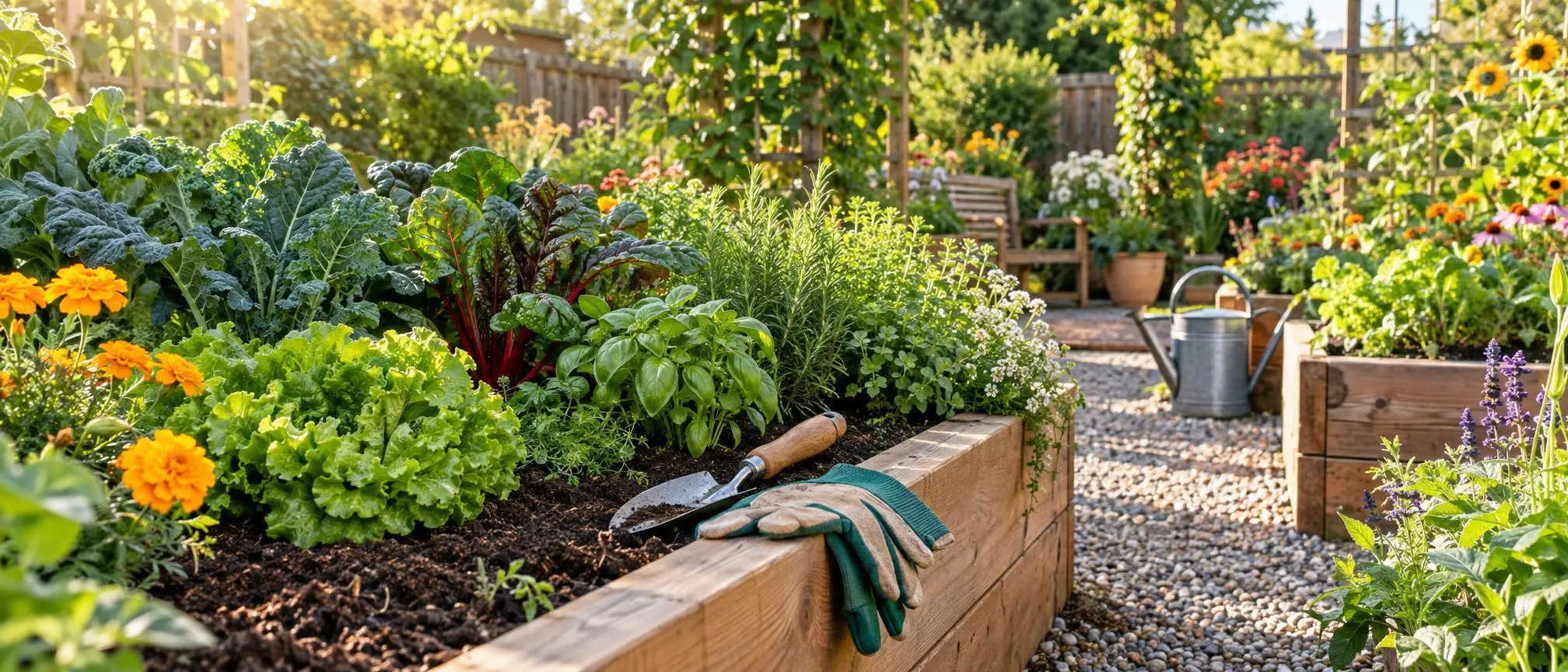

Gardening tips can help you create a flourishing outdoor space that brings numerous positive effects on your home and well-being. Some of these effects include being connected to nature, increasing your home’s value through better curb appeal, producing beautiful flowers, and growing fresh vegetables and healthy plants. Regardless of whether you choose a large yard, small patio, or container garden, investing time to learn the best care methods ensures a successful harvest.
Creating a new garden can feel overwhelming. Many questions will probably come into your head: How much water should I give my plants? What’s the ideal type of dirt to use when planting? Why do some of my plants seem so happy while others appear to struggle? Don’t worry though! If you plan correctly, you won’t need to spend decades learning about gardening before you can create a successful garden.
When you learn the fundamentals of gardening from experienced advice, you will be able to avoid some of the most common mistakes that beginners often experience, understand what your plants need to grow properly, and develop successful gardening methods.
The biggest secret of plant care is that plants will thrive if we provide them with everything they require. Good soil quality, enough sunlight, adequate water supply, good temperature regulation, and proper care will help us to produce healthy plants.
In this comprehensive manual, you will learn 25 valuable gardening suggestions for every phase of your gardening experience, including preparing the earth prior to planting, choosing appropriate plants, managing typical gardening insect problems, and maintaining a healthy-looking garden throughout the entire calendar year.
These techniques may be used to start a new garden from seed, or enhance an established one. The results of applying these methods will be a healthier and more productive growing environment.
Why Learning Basic Gardening Skills Matters
To be a successful gardener, you must do more than just plant seeds in the dirt and pray for growth. Every seed that grows into a plant has an interaction with the area around it (soil, water, light, temperature, other plants/animals).
By understanding these connections, you can make more educated decisions than by just making random guesses.
Yellowing of the leaf is not always caused by lack of water. It can be due to too much moisture, inadequate drainage, nutrient deficiency, or normal aging. Identifying what has caused the problem will help you avoid causing further harm.
The top gardening advice is to pay attention to your plants and respond to what they really need.
Developing these skills offers several benefits:
- Healthier plants and stronger root systems.
- Better flower production and vegetable harvests.
- Reduced water waste and unnecessary maintenance.
- Improved soil quality and biodiversity.
- Greater confidence when solving common garden problems.
- A more attractive and enjoyable outdoor environment.
Remember that gardening is a learning process. Every growing season provides opportunities to understand your environment and improve your results.
1. Start With a Small and Manageable Garden
One of the most valuable gardening tips for beginners is to start small.
Although a big garden looks exciting, taking care of so many plants can be hard. Plants need to be watered, weeds pulled up, dead branches cut back, and we need to check if they are doing well on a regular basis.
Create a limited number of plantings (such as in a small garden plot), several containers with plants, or a collection of plants that will thrive in your climate.
Select a place where you will be able to easily go. It is much more probable that a garden located close to your house will be cared for on a regular basis than one which is hidden in some far away location.
As your confidence increases, gradually expand the growing area.
Starting off small can give you some time to figure out what types of plants do best in your area’s climate before you commit to a larger garden.
2. Choose the Right Location for Your Plants
Location plays a major role in plant health.
One of the best gardening tips is to understand how various areas of your yard get sun during each part of the day.
Many types of vegetables and flowers require about 6-8 hours of direct sun per day. Some other plants may do well with partial shade, particularly when there is a lot of strong afternoon sunlight.
Prior to planting, take a look at the amount of space you have at three different times throughout the day: morning, afternoon, and evening.
Consider the following:
- How many hours of direct sunlight does the area receive?
- Does rainwater collect in certain locations?
- Is the site exposed to strong winds?
- Can you reach the garden easily for watering?
- Do nearby trees create substantial shade?
The growth of plants is improved when they are matched to their optimal growing conditions, which helps reduce the amount of stress that the plant experiences.
3. Understand Your Soil Before Planting
Healthy soil is the foundation of a successful garden.
The many gardening tips that exist are focused on water and sunlight, however, the quality of your soil is just as vital.
Soil supports roots physically and stores water, oxygen and needed nutrients.
Three common soil types are sandy, clay, and loamy soil.
Sandy soil is able to drain well; however, it has difficulty retaining moisture. On the other hand, clay soil is able to retain water and nutrients effectively; however, clay soil is prone to compaction which limits its ability to drain. Loamy soil typically offers a good combination of moisture retention, aeration, and drainage.
You can determine what kind of soil you have by touching it and seeing how well water flows through it.
Consider taking a soil sample for a lab analysis (pH and key nutrients) so you can get more precise data.
You can use your knowledge of current conditions to help you make improvements to the soil without changing anything else.
4. Improve Soil With Organic Matter
One of the best ways to maintain your garden’s soil quality is by incorporating organic material into it.
The use of well-decomposed compost can improve the structure of your soil, support the growth of helpful organisms, and help to maintain proper moisture levels in the soil.
In a sandy soil environment, organic matter can enhance moisture retention. On the other hand, in a heavy clay soil environment, organic matter can provide improved structure and establish a more favorable environment for root growth.
Spread the completed compost onto the soil surface of your garden/growing area and lightly dig into the top layer of soil if you feel this is necessary.
Compost is applied directly onto the top layer of your garden bed. It will be incorporated into the soil by earthworms and other natural biological processes.
Decomposition may temporarily alter the availability of nutrients if large quantities of un-decomposed organic matter are mixed into planting soil.
Developing healthy soil is a slow process that requires ongoing improvement rather than making all the changes simultaneously.
5.Select Plants Suitable for Your Climate
Not every plant grows successfully in every location.
One of the best gardening ideas is to choose plants which fit the climate, sun exposure and growing period you have available.
Research your local climate conditions (average first frost date, average last frost date, average high/low temperature for each month of the year, average rainfall amounts per year).
The hardiness zone system provides a general idea of how likely it is for perennial plants to survive in the typical cold weather of a given region’s winters. However, the system cannot provide you with a comprehensive understanding of what kind of summer heat, humidity and soil moisture your area experiences.
For vegetable gardening, consider the length of your frost-free growing season.
Generally speaking, plants that are native to an area tend to need less help from us, and they are more likely to develop well-developed root systems.
Native plants will provide food and shelter for your area’s wildlife if you choose the right native plant for your specific location.
6. Learn the Difference Between Annuals and Perennials
Understanding plant life cycles makes garden planning easier.
These basic gardening ideas will help you determine which plants to grow during every season.
Annual plants complete their entire life cycle in a single year. They are born, develop, reproduce by flowering and producing seed, and ultimately pass away.
Under ideal circumstances, perennial plants can exist for many years. Many perennial plants disappear below ground level during the colder months (winter), but they will reappear above ground level once the weather warms up again.
Biennials usually complete their life cycle over two growing seasons.
When you need to adjust your garden’s design from time-to-time, annuals will give you that option. Perennials will offer a stable framework for your garden over time.
Using multiple kinds of plants can help you make a visually appealing and interesting garden all year long.
7. Water Plants Deeply and Carefully
Proper watering is essential for healthy plant growth.
One of the greatest misconceptions regarding gardening practices is to base when you water your plants on how much they need water instead of using a set amount of time each day.
Soil type, rainfall, temperature, plant size, and growing conditions determine the amount of water required.
Most established garden plants are best watered deeply and then allowed some time for the soil to dry out a bit.
Deep watering helps make sure that water gets down into the area where the plant’s roots are located. On the other hand, watering your plants too often can result in a build-up of excess water in the soil, which will restrict the amount of oxygen available to the roots.
Check the soil before watering.
To assess if there is enough moisture in the soil, check the moisture content at a slightly greater depth than where you can feel the dry top layer of soil.
The close monitoring of new seedlings, newly transplanted plants, and container gardens is usually necessary compared to established gardens.
8. Water at the Most Suitable Time
Timing can affect watering efficiency.
When people ask for practical advice on how to grow plants, they usually hear that it is better to water their garden in the morning when the temperature is cooler and there isn’t much wind.
Morning watering will provide water to the root system prior to the hottest period of time each day.
It also provides the opportunity for wet foliage to dry out which could possibly reduce those environments that are conducive to some leaf-related disease.
Watering in the evening may be required on occasion, especially when it’s hot outside, however, try to prevent disease susceptible leaves from being too wet for long periods of time (overnight).
Whenever possible, direct water toward the soil instead of spraying the leaves.
Regardless of how you prefer to water your plants, the most essential factor is providing adequate amounts of water to your plants at appropriate times.
9. Use Mulch to Protect the Soil
Mulching is one of the simplest gardening tips for improving soil conditions.
Mulch is a protective layer of material placed on the soil surface.
The use of organic matter including, but not limited to, shredded leaves, straw, and non-chemically treated plant waste may assist in reducing water loss through evaporation, control of undesirable weed growth, and maintenance of more uniform soil temperatures.
As organic mulch decomposes, it can contribute to soil organic matter.
Apply mulch around existing plants but don’t apply it to the stem or tree trunk.
A thin layer (approximately two to three inches) of mulch is effective for most garden beds. However, the best thickness of mulch is dependent upon both the type of mulch being used and the types of plants growing in the garden bed.
The use of too much mulch may disrupt air flow, water flow and/or the well-being of the plants’ stems.
10. Give Every Plant Enough Space
Crowded plants compete for light, moisture, and nutrients.
One of the gardening secrets that many people overlook is making sure there is enough space for your plants to grow into adulthood.
When you plant a tiny seedling, it appears insignificant at that point, however, as time passes, so do its root system and foliage.
Overcrowding causes poor airflow, which may create a favorable environment for some types of fungal diseases.
It may also cause plants to stretch toward sunlight, resulting in weaker growth.
Check the expected mature height and spread of each plant.
Place taller plants so that they don’t block the light for smaller sun-loving plants.
Adequate spacing of plants allows for easy access to water, check on plants, and perform general upkeep, all while giving the garden space to grow on its own.
11. Plant Seeds at the Correct Depth
Seeds contain stored energy that supports early growth.
In order to improve seed germination, following the correct planting procedures is one of the best gardening techniques.
Seeds that have been planted too deeply can exhaust their stored energy before reaching the surface.
Seeds planted too shallowly may dry out or become exposed.
Many seeds are typically sown about 2-3 times as deep as they are wide. On the other hand, certain types of extremely small seeds need light in order to sprout, so these must be left on top of the soil or close to it.
Always consider the specific requirements of the plant.
Maintain consistent moisture during germination without saturating the soil.
The germination process is dependent upon several factors such as temperature, oxygen availability, seed quality, and species specific requirements.
12. Prepare Seedlings for Outdoor Conditions
Young plants grown indoors need time to adjust to outdoor conditions.
The process of hardening off is a key tip for beginning gardeners starting their own plants from seeds.
Seedlings grown inside generally experience a stable environment (temperature), limited movement (wind) and softer light.
Sudden exposure to strong sunlight or cold temperatures can stress them.
Start by setting your plants outside in an area that is protected from direct sunlight (shade) for a brief time.
Over about one or two weeks, gradually introduce them to outdoor conditions such as sun, wind, and typical outdoor temperature.
Bring plants indoors if conditions become unsuitable.
Gradual adaptation will help your seedlings grow stronger stems and reduce transplant shock.
13. Keep Weeds Under Control
Weeds compete with garden plants for important resources.
A regular program of controlling weeds is one of the most important ways to keep a garden productive.
In general, it is much simpler to pull small weeds out of the ground compared to removing large, mature weeds with well-developed root systems.
You should inspect your gardening beds often, particularly after it rains because you can often work with the soil more easily.
Remove weeds carefully to avoid disturbing nearby roots.
Mulching can reduce the number of weed seeds that successfully germinate.
Also, you can reduce the amount of soil disturbance that occurs during cultivation as well, since when you turn the soil, you can bring up some of those buried weed seeds to the top layer.
Consistent focus will be easier to manage than waiting until weeds are out of control before trying to remove them.
14. Encourage Beneficial Insects
A healthy garden contains many helpful insects and other organisms.
The use of effective gardening techniques can help support the growth of natural predators, as opposed to viewing all insects as problems.
Bees, butterflies, hoverflies, and other pollinating insects assist many types of flowering plants to reproduce.
Natural biological controls for insect pests include ladybugs, lacewings, and some types of parasitoid wasps.
Growing various types of flowers which will flower at alternative intervals offers more continuous food supplies.
Include suitable native flowering species when possible.
Leave some undisturbed habitat and avoid unnecessary insecticide applications.
Many insects do not need to be treated. Many are harmless, some are even helpful, and the biodiversity of a garden can help make the garden more resistant.
15. Identify Garden Pests Before Taking Action
I find it very helpful to see damage to my plants’ leaves, but even more so to know why they have been damaged. I would rather figure out what caused the damage first, before taking action.
The most responsible garden advice is to identify if your plants have been damaged by bugs, illness, weather conditions, or animals.
Inspect both sides of leaves, stems, and the soil surface.
Visible insects, irregular holes, discolored leaves, distorted growth, or odd-shaped patterns may indicate a problem with your plants.
Some minor feeding damage is normal and does not threaten the plant.
Integrated Pest Management (IPM) should be used when addressing larger problem areas. This type of management involves using a systematic approach that includes: monitoring; preventing; correctly identifying pests; and selecting the least invasive method to effectively treat those pests.
Removing affected leaves or using physical barriers may sometimes help.
Avoid applying treatments without knowing what is causing the problem.
16. Understand the Importance of Pruning
The process of pruning allows for maintaining a plant’s form, eliminating damaged areas, and supporting good overall health.
One of the most essential gardening advice is to understand that there are varying requirements for pruning among various types of plants.
Dead, diseased, or broken branches may be removed when appropriate.
Shaping routines should be based on the growth habits of each plant and the timing of flower production.
If you prune some types of flowering shrubs at the wrong time of year, you may be cutting off the flower buds for next year. This is because these types of flowering shrubs produce their flowers from old wood.
Others flower on new growth and tolerate different schedules.
Make clean cuts using suitable, well-maintained tools.
Avoid removing excessive healthy foliage unnecessarily.
Pruning of plants with care will support plant health, however cutting randomly may cause stress to plants.
17. Practice Companion Planting Carefully
Companion planting is when you grow two or more types of plants together so they can potentially benefit from each other in either a useful way (for example, by helping control pests) or in an environmental sense (such as providing shade).
Often used to promote insect activity that can help to control pests in a garden, the method is also helpful for creating an efficient use of land and encouraging variety.
For example, combining flowering plants with vegetables can provide resources for pollinators.
Shaded areas created by tall vegetation may provide an area for smaller, shade-tolerant plant species to grow.
However, not all well-known claims regarding companion planting are backed up by solid scientific research.
Growing two plants together is not going to automatically help them grow better or keep bugs away.
Focus on compatible sunlight, water, soil, and spacing requirements.
Treat companion planting as an effective planning method, but don’t expect it to solve all your gardening problems.
18. Rotate Vegetable Crops When Possible
The continued use of a specific crop type in the same area may create issues with certain pests and diseases.
A good tip for people who grow vegetables is to plan out how you will rotate your crops.
Crop rotation is an agricultural practice that alters the type of crop being grown in a specific area (bed) from year-to-year.
An example is that tomatoes and peppers are part of the same plant family so they can have similar insect and/or disease problems.
Rotating unrelated crop families can help interrupt certain biological cycles.
However, crop rotation will not solve all of your garden’s soilborne disease problems. In addition, small gardens may have limited options.
Combine rotation with proper management of the soil through healthy practices, clean-up of the area after harvest, use of correct spacing between plants, and selection of disease-resistant varieties when appropriate.
Keeping basic planting records makes future planning easier.
19. Learn How to Compost Organic Materials
Composting transforms suitable organic waste into a valuable soil amendment.
Composting is a common environmentally friendly gardening technique used to support the natural recycling of nutrients.
Finished compost can improve soil structure and encourage biological activity.
A typical compost pile will contain both high-nitrogen materials, like recently cut grass or other green plants, and high-carbon materials, like dead leaves.
Adequate moisture and oxygen help microorganisms break down these materials.
The pile should generally feel damp rather than waterlogged.
Depending upon the composting method, occasionally turning the compost can increase aeration.
If you are unsure if your compost bin will properly break down any disease causing agents (pathogens) contained within the plant material you wish to put into it, then do not add that plant material to your compost bin.
Use compost after it has matured into a stable, earthy material.
20. Prevent Common Plant Diseases
Disease prevention is often easier than treating an established infection.
The most effective way to prevent plant diseases is to create an environment where they are less likely to occur.
Begin with healthy planting material and suitable growing conditions.
Provide adequate spacing to improve airflow.
Avoid long periods of wetness on leaves as much as possible, particularly on plants prone to fungal disease.
Dispose of heavily damaged plant parts correctly, when required.
Clean tools between plants if there is a risk of transmitting disease.
Do not think every brown spot means there is an infection. Many things like sun damage, nutrient problems, lack of water (drought), etc., can cause the same symptoms.
Accurate identification should guide your response.
21. Create a Garden That Supports Pollinators
Pollinators play an essential role in many natural ecosystems and food crops.
Gardening methods that support wildlife will help you establish habitats in your garden no matter how small or large.
By choosing several types of flowering plants with differing bloom periods you will create a continuous source of food for bees and other pollinators during the entire growing season.
You can use multiple varieties of flowers as long as you consider that different types of pollinators require different amounts of nutrition.
As a general rule, native plants are beneficial because they aid in maintaining the natural state of an area.
Provide your garden with a good type of protection, and try not to remove every single natural element from your garden.
Provide a safe and shallow source of water for your pet to drink from that will not create a drowning risk for your pet, when appropriate.
A pollinator-friendly garden is not only visually appealing, but it provides significant environmental benefits.
22. Use Containers for Small-Space Gardening
You do not need a large backyard to enjoy growing plants.
A majority of the best ways to utilize a small area, like a balcony, patio, or window sill, to create a garden can be quite easy.
Gardeners can move their plants with containers based on where they want to place them for sunlight or as the seasons change.
Drainage is particularly important because excess water must be able to escape.
Rather than assuming that any standard garden soil can be used successfully for growing plants in different kinds of containers, choose a suitable growing media.
Container grown plants can dry out much faster than those planted in the ground.
Check moisture regularly, especially during hot or windy weather.
Choose plants that match the available container size and growing conditions.
Even a modest container garden can provide flowers, herbs, or vegetables.
23. Adjust Gardening Tasks With the Seasons
Plant requirements change throughout the year.
Seasonal gardening tips help you plan important tasks at appropriate times.
In springtime, gardeners typically get their gardens ready by preparing the soil in their garden plots, starting seeds for new plants, transplanting existing plants into the garden plot that can survive outside, and looking at how well the perennials are growing.
Monitoring of irrigation requirements, weed management, pest control, and harvesting of crops are typical activities during the summer.
Fall is a good season to work on your garden by working with your soil, planting the right perennial plants, raking up leaves, and getting ready for the cold weather ahead.
The winter season is a time to look over your past gardening records, plan what you will plant next year, and protect any of your plants that are susceptible to cold weather.
These schedules vary considerably by region.
A gardener in a warm, southern environment would likely find that they had various planting options than someone who experiences prolonged periods of below-freezing temperatures.
Always use local weather patterns rather than relying on calendar dates alone.
24. Recognize Signs of Plant Stress Early
Plants often show visible symptoms when growing conditions become unfavorable.
Developing observational skills can be one of the best ways to ensure success with your gardening over time.
Common warning signs include:
- Wilting or drooping leaves.
- Yellowing or unusual discoloration.
- Slow growth or weak stems.
- Brown leaf margins.
- Premature flower or fruit drop.
- Unusual spots or distorted foliage.
However, individual symptoms rarely identify the exact cause.
For instance, wilting is possible due to the fact that the soil is overly dry; however, wilting can also take place if the soil is so wet that it doesn’t allow the plant’s roots to function normally.
Before you change the way you take care of your plants, check out how much water is in the ground, how well it drains, the temperature outside, how much sun they get, and what has been going on with the weather lately.
Responding to evidence is always better than automatically adding water/nutrients.
25. Keep a Simple Gardening Journal
Keeping records is one of the most underrated gardening tips for both beginners and experienced gardeners.
A garden journal helps you understand what works in your specific environment.
Record important details such as planting dates, plant varieties, weather conditions, watering patterns, flowering periods, and harvest results.
You can also note pest problems, unusual symptoms, and changes in soil conditions.
Over time, these observations may reveal patterns that are easy to overlook.
For example, you may discover that certain vegetables perform better in a different location or that a particular bed dries out more quickly than others.
A notebook or simple digital document is sufficient.
The goal is not to track every minor detail but to collect useful information for future growing seasons.
Common Gardening Mistakes Beginners Should Avoid
Even with good preparation, gardening involves occasional setbacks.
Understanding common mistakes can help prevent unnecessary frustration.
| Common mistake | Why it causes problems | Better approach |
| Watering too frequently | Can reduce oxygen around roots | Check soil moisture before watering |
| Planting too closely | Creates competition and poor airflow | Follow mature spacing requirements |
| Ignoring sunlight | May reduce growth and flowering | Match plants to available light |
| Using unsuitable soil | Can limit drainage and root development | Evaluate and improve soil conditions |
| Planting at the wrong time | Exposes plants to unsuitable temperatures | Follow local growing-season guidance |
| Overusing nutrients | May damage roots or create imbalances | Test soil and apply only what is needed |
| Ignoring early pest symptoms | Allows some problems to spread | Inspect plants regularly |
| Pruning at the wrong time | May remove flower buds | Learn plant-specific pruning requirements |
The best approach is to make gradual improvements based on your observations.
Simple Weekly Gardening Routine for Beginners
Consistency with gardening practices will be less difficult to maintain once you create an achievable schedule.
You do not need to spend hours working in the garden every day.
Instead, divide important activities into short tasks.
Daily observations
Walk through the garden and check whether plants appear healthy.
Be aware of the moisture level, unusual damages, and changes in the weather.
Newly-established plants and container-grown plants typically require more frequent monitoring than those that are already established.
Weekly maintenance
Remove young weeds; examine leaves for insects; determine if plants need support, or if they require a little trimming.
Monitor mulch coverage and remove damaged plant material when necessary.
Monthly review
Evaluate overall growth, soil conditions, and any recurring problems.
Update planting records and make adjustments based on seasonal changes.
The flexibility of the routine is what you need to remember. Your garden needs to be treated based upon the present state of the garden, not a strict calendar.
How to Create a Healthy Garden Naturally
A successful garden is much more than just a collection of various plant types. Rather it is an entire ecosystem that consists of soil organisms, insects, plants, and the surrounding environment, which all work together to create a thriving system.
Applying sustainable gardening tips helps support this balance.
Begin with soil improvement and choose plants suited to the site.
Encourage biodiversity through varied planting and flowering periods.
Preserve soil moisture through thoughtful watering and mulching.
Reduce unnecessary soil disturbance and maintain good sanitation.
Observe the positive organisms prior to determining if a pesticide control action will be needed.
Most importantly, remember that healthy ecosystems take time to develop.
A garden doesn’t need to look immaculate and have absolutely zero bugs to be successful.
Frequently Asked Questions About Gardening Tips
What are the best gardening tips for beginners?
The most helpful gardening advice for those who are just beginning their gardening journey would be to begin your first garden on a smaller scale; select plants that will grow well in your specific area (climate/soil); understand how much light is needed by the plant you want to grow; improve the quality of the soil where you plan to plant; check to see if the soil is wet or dry prior to watering. Consistency and regular maintenance of the garden is far more significant than the use of advanced gardening methods.
How often should I water my garden?
Watering schedules are based upon temperature, soil type, rainfall, plant species, and plant size. Do not water automatically on a daily basis. Check the soil around the plant’s root area. When the soil requires moisture, water the area completely. However, try to avoid having the soil remain wet for extended periods of time. New seedlings and plants grown in containers may require more frequent watering.
What is the best time of day to water plants?
Early morning is a great time to water your plants. The temperature is lower than during most parts of the day and this reduces how much water will evaporate. Watering the soil directly will prevent excess moisture from building up on the leaves of the plant. If a plant has been subjected to extreme levels of water stress, it should be watered as needed.
How can I improve poor garden soil naturally?
Many soils may be improved gradually by adding finished compost and maintaining organic mulch. Compost and organic mulch will aid in improving the soil structure, managing the water content within the soil, and increasing biological activity. Soil testing can assist in identifying pH or nutritional deficiencies which need to be corrected through the use of specific amendments. Prior to applying any amendment, it is essential to determine what the current condition of the soil is.
Can I start gardening without a backyard?
Yes, many types of plants will do well in a container setting (patio/balcony/windowsill) if the proper light conditions exist; the correct type of soil is used; and the container has sufficient drainage. Some examples of plants that are suited for this type of gardening include herbs, flowers, leafy greens, and compact varieties of other types of plants.
Why are my plant leaves turning yellow?
The leaves of your plants may turn yellow due to over watering, too little water, too many or too few nutrients, not enough light, an infestation of pests, or simply the plant getting old. You should assess the condition of the soil and other aspects of how you are growing the plant prior to making any changes. It is essential to determine what the cause of the problem is so that you can use the appropriate solution to fix it.
How can I keep garden plants healthy throughout the year?
Seasonal Gardening Tips: Water, Plant, Prune and Maintain According to Your Local Weather. Improve Your Soil Health. Weed Regularly. Check Your Plants for Early Signs of Problems. Select Plant Varieties That Are Well Suited For Your Area’s Climate. If You Watch Over Your Garden Regularly, Then You Will Be Able To Act On Issues Before They Turn Into Major Problems.
Is compost good for all garden plants?
Compost is a great addition to most garden soils. However, how much you use and where you put it will vary depending on your plants’ needs and the current condition of your soil. Many plants thrive in low-fertility soils. It is also important that compost has had time to mature before being applied. Over-application of compost can be harmful, especially if your soil is already very fertile.
What vegetables are easiest for beginners to grow?
Radishes, lettuce, bush beans and some other leafy greens can be successful when grown under proper conditions. Success will depend upon factors such as climate, planting time of year, amount of sunshine, and available growing area. Cool-season vegetables can experience difficulty during the hottest months of summer, and warm-season crops will need the correct temperature range.
How long does it take to become good at gardening?
As beginners are able to obtain a basic knowledge of how to grow things in their initial year of growing, it will take them some time to gain an understanding of what works best for them based upon the specific location where they reside (soil type), the climate of that area (weather), any common pest problems that may occur, as well as the types of plants that would thrive there. The ability to keep track of observations, as well as experiment with different methods, should allow for better results each subsequent year.
Final Thoughts: Grow a Better Garden One Step at a Time
Creating a thriving and visually appealing garden isn’t about being perfect. It is about patience, taking time to watch what’s going on, and understanding the ways that plants interact with each other and their surroundings.
The best gardening advice centers on basic principles of planting the right type of plant in the right environment, creating a nutrient rich soil, being careful when watering, giving your plants enough sunlight and keeping up with the maintenance of your garden year round.
Begin with an easy to manage project, then build on your skill level. Use your failed projects as opportunities for learning rather than seeing them as final defeats.
Every garden is unique, therefore what has worked well in one type of environment will probably have to be modified in order to work in another.
The application of these useful gardening suggestions will allow you to develop self-confidence, encourage healthier growth of your plants, and establish a garden that will be increasingly satisfying as you continue to grow your crops.
Remember: A great garden isn’t built in one day. It takes small, intentional steps taken regularly to develop it.