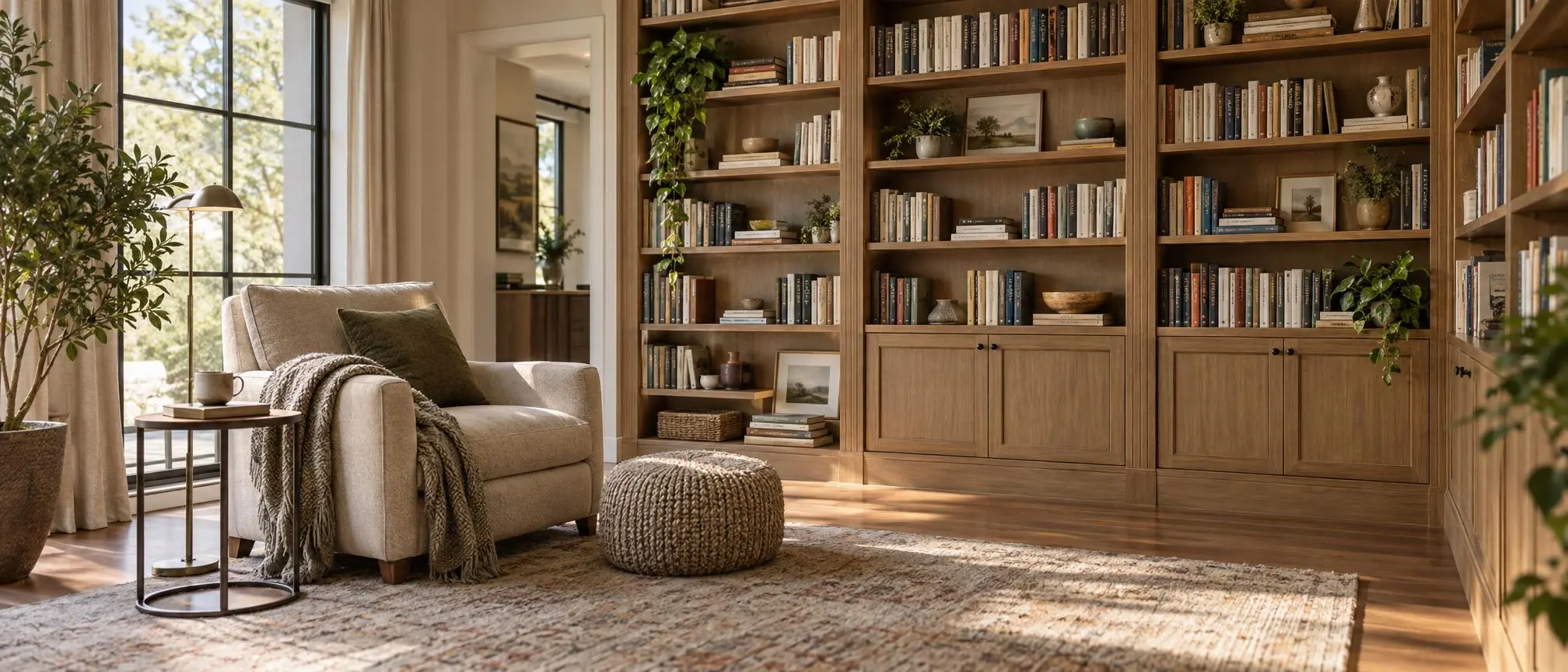
Home Library: How to Create, Organize, and Maintain

An organized home library can make a common place in your house feel like a welcoming space for reading, learning, and relaxing. You do not need a whole room for this purpose or a great many books. Even a small space can be useful as long as you have organized your books, provided sufficient lighting and arranged the furniture in a manner that fits with your day-to-day activities.
Before you begin building your home library, think about how each person who uses the space will be able to take advantage of the space. Some homes need a quiet place to read, while others might want a quick way to find their kids’ books. Some homes would like to have a study area, and other homes might need a place to put away reference books. If you decide what you want the space to do before you start moving furniture around, it will help you make a functional space that you can use for many years.
The manual describes how to choose a location, purchase the books, maximize the space you have, make the area more comfortable, and keep your book collection intact while keeping the organization of the books intact.
1. What Is a Home Library?
A home library is a dedicated space for storing and organizing books for reading, studying, and relaxing, ranging from an entire room to a quiet bedroom corner.
Unlike a typical book storage area, a home library has been developed based upon how people will utilize their books. A home library provides a convenient way to store your books while providing an atmosphere that encourages you to read and allows you to find specific titles with ease.
A home library’s makeup varies by family reading habits, often featuring fiction, children’s books, cookbooks, gardening books, biographies, educational books, and reference texts.
The goal is not simply to acquire a vast number of books. The objective is to build a practical, well-organized library which users will find both enjoyable and manageable.
2. Choose the Right Location
When you begin to plan your own home library, location will likely be the first decision you make. You should consider where you usually read, what amount of space is available, and if that location provides adequate lighting.
Living Room
An easy chair and a side table provide a reading space in the living room without separating reading from other household activities.
Do not let books clutter areas where you typically perform daily tasks, and make sure to leave pathways clear.
Bedroom
Wall-mounted shelves and small bookcases utilize vertical space in a bedroom while keeping the floor open for a quiet reading area.
Do not install heavy shelving units over your bed or other seating area unless you have installed them safely and they were designed specifically to be used in that location.
Spare Room or Study
An empty space allows for a more flexible layout of your large home library. This type of space provides options to define different functional zones such as study/writing, reading, storage of books, etc.
Plan desk placements, check outlet locations, review ventilation, and ensure easy movement around the shelves before filling the room.
Unused Corners
A corner under a staircase, a wide corridor alcove, or a lightly utilized alcove may have sufficient room for a modest number of books. Accurately assess the size of this location and ensure that the books are easily accessible.
A better option for you would be a place that works with your daily schedule, instead of just something that looks good in photos.
3. Plan Your Space Before Organizing Books
Good planning will keep your home library from being too crowded and allow you to access it more easily. To begin with, you need to measure the wall space, the floor area, and the height of the room that you intend to put your library in. You can then determine which areas of the room would be best suited for placing shelves and seating.
Create a basic floor plan that includes your door, window, radiator, and walk-way. By doing this you can determine where it is possible to place storage boxes so they do not block your way, or prevent you from being able to move around.
Estimate the amount of books you have now. Also, look in other parts of your home, like bedside tables, closets, and storage boxes, to make sure your estimates are accurate for what you own.
Save some space so that you can add items to your collection in the future. If you fill your shelves completely before adding any more, it may be difficult to move things around or to add new items.
Storage is a trade-off: you need enough shelf space for your books, plus enough open room for comfortable reading and daily movement.
4. Organize Books With a Simple System
An organized book storage system helps you easily locate books and return them to their proper places. The best way to organize your collection depends on your total number of books and how you recall their titles.
Arrange Books by Genre
Organization of books alphabetically by author can be helpful if you find yourself frequently searching for works written by a specific author.
This method helps families categorize and learn the types of items they share.
Arrange Books Alphabetically
Organization of books alphabetically by author can be helpful if you find yourself frequently searching for works written by a specific author. It is recommended to keep books by the same author grouped together and then organize them using a consistent method.
Choose either sorting by author or by title, and use that method consistently across all appropriate sections of your library.
Group Books by Subject
Many times, non-fiction collections are better organized by topic, much like the diverse categories found in the WorldCat Top 500 Libraries
. For example, you may want to have all of your gardening books in one place; then have all of your travel books in another; and your education reference books in yet another; and finally, your cooking books in their own space.
Organize by Reading Priority
Group your unread books separately from your favorites or frequently used books. This makes it easier to choose your next read and keeps newly purchased books from getting lost among older ones.
Select a method of organization which will allow you to maintain your collections in order to avoid having to constantly reorganize them.
5. Make Small Home Library Spaces Work
While you may not have much space available, you can still develop an operational reading area. In order to accomplish this objective, consider carefully what you can use as surface area in your home, and avoid filling every corner of your room with containers for storage purposes.
Vertical shelving maximizes wall space when properly sized and installed, while narrow bookshelves or a single shelf suit smaller collections and areas.
Look around your home and identify areas where you do not have any items displayed. Examples include the space adjacent to your desk, or an empty portion of the wall in your living room.
Multifunctional spaces work well.A home office can function as a study and a library when you place books on shelves near the computer workspace, and a bedroom can serve as a space for sleeping and reading.
Decluttering decorative objects and loose papers prevents your home library from feeling cramped, maintaining a clean and organized space.
6. Choose Shelving and Arrange It Safely
Ensure your shelves can support the weight and dimensions of your book collection. Before placing books on a shelf, verify its weight capacity, stability, and suitability for the space.
When possible, put the most weight in the lower part of your shelving system. Loading heavy items on the lower shelves makes accessing your collection easier and reduces the risk of top-heavy shelving tipping over.
Securely attach any large bookshelf to a wall using the appropriate hardware from the installation guide, especially if you have young children or pets at home. You should also refrain from using shelves to climb up to get to books that are out of reach.
Give books ample space on shelves. You can easily pull them out without pushing against other books. Large books usually need a separate, horizontal shelf. They often do not sit well vertically.
Leave enough room on your shelves so that you can easily move around books, which will make daily use much easier.
7. Improve Lighting and Reading Comfort
Lighting increases the comfort of a home library and reduces reading effort. Helpful natural light also brings risks. Direct sunlight can damage book covers and ruin paper quality over time.
Keep your bookshelf out of the way of the direct sun when you can. Use shades on the windows to control how bright it gets, and think about adding some extra light if you want to read during the night or on cloudy days.
A reading light shines down on your page so your whole room stays dark. Place your lamp to reduce glare and shadows during long reading or writing sessions.
Comfort matches visual appeal in importance. Along with proper seating, you can elevate the overall look of your reading space by styling the surrounding walls appropriately you can check out this guide on Wall Decor for creative ideas to make your reading nook look complete and inviting.
Organize frequently accessed items to make reading feel like part of your daily routine. You do not need to treat it as another chore to prepare for.
8. Keep the Space Calm and Clutter-Free
Home libraries are designed to provide a space where you can read, rather than a place to store household clutter.
First, remove all items that are not relevant to the collection.Such items may include old paper, extra accessories, empty boxes, and other unrelated objects that take up valuable shelf space.
To store your reading accessories (bookmark, etc.) and other loose items, use a small basket or container. Try to limit the number of items you put into this container/basket; if you do this, it will be easier for you to find what you are looking for.
A way to show who you are through your home is with the help of decorative objects. Just remember that there has to be enough space on the shelves so you can put books there. Add small photos, art, or potted plants to improve your shelf display. These items create a relaxed and welcoming space while letting you easily reach the books for cleaning.
Return books to their original location after use. Return books to their proper places after use. Putting items away keeps your desk neat and saves you from a massive cleanup later.
9. Protect Books From Dust, Moisture, and Damage
Protecting your private book collection from environmental damage is part of the preservation process.
You should frequently clean your shelves with a clean, dry, and soft cloth. Be careful when you remove books from your shelves to clean them. Do not pull books out of a shelf using just the tops of their spines.
Keep your collection indoors in a relatively stable and dry environment. High humidity will allow mold to develop. Also, if there are sudden temperature changes and/or high dryness levels, your collection may be damaged.
Books should be kept as away from damp walls as possible. Additionally, books shouldn’t be stored in areas where water could potentially leak into the area such as basements, attics, or garages. These areas have varying environmental conditions that relate to temperature and/or humidity. Therefore, these types of areas are not suitable for storing your most valuable books.
Immediately clean up any spills and wait until the area surrounding the spill is completely dry. Separate wet or moldy books from your collection. Consult a professional about how to preserve damaged books.
Keep your books away from direct sunlight and extreme temperature changes. Inspect your books regularly to catch problems early.
10. Maintain Your Home Library Over Time
Organization is the most successful when it is manageable following the first time you set it up.
How much time you spend checking your books for damage, dust, or missing pages depends on how much you use the area. You can reserve a small fraction of your free time regularly for this check.
When the shelves in your library start to fill up, review what you have. When the shelves in your library start to fill up, you should review what you have.You should consider whether every single volume on those shelves has value, holds special significance for you, or is likely to be read again.
You can give away, share, or pass on books you no longer need to others who will appreciate them, provided they remain in good condition. You do not need to throw out useful books just to live a simpler life.
If you have a large collection, create a simple spreadsheet or inventory list. You can note each item’s title, author, subject, shelf location, and room. This helps you track where everything is in your home.
Establishing habits that prevent clutter from coming back. A well organized collection will provide for easy reading without creating a long term maintenance problem.
Frequently Asked Questions
How do you create a home library in a small house?
Select an unused area of your home, determine how much room you have, and utilize appropriate vertical storage. Maintain organization of the books, ensure that there are clear paths throughout the area, and provide some seating options (if applicable) only if they do not crowd the space.
What is the best way to organize books at home?
Grouping your books by genre or topic can make finding what you want to read easier, but organizing them alphabetically can help you find individual authors or titles. You should select an organization method that fits your needs and use that system consistently.
Does a home library need a separate room?
No, a separate room is not required. You can make an effective reading space by adding a bookcase to your living room, creating a small reading nook in your bedroom, or setting up a compact study space.
How can I keep bookshelves from looking cluttered?
Remove unnecessary items from the shelves, organize the books in distinct groups, and don’t overcrowd the shelves. Decorate only a few areas, and replace all books in the proper place after reading them.
How should books be stored to prevent damage?
Store books in a cool, dry place. Keep books away from heat and light sources. Books can be damaged by high temperatures, direct sunlight, moisture, and extremes of temperature. Store books on clean, dry shelves. Inspect books often for damage. Avoid keeping book collections in damp places.
How often should I reorganize my books?
Smaller reviews may occur when books are returned, or when the organization of the shelves becomes disorganized. A larger review should take place every couple of months, or after the library has added a large quantity of materials, so that the organization remains functional.
Can a home library also be used as a study room?
A reading area may share a room with a desk, writing tools, and reference books, provided you organize work-related materials so they do not block access to books or interfere with a comfortable reading experience.
Conclusion
Creating a home library has more to do with creating accessibility, organization, and enjoyment of using the books than it does with having a lot of books. To create a good base for your home library you should have an appropriate area to put the books, a simple way of organizing the books, proper lighting to read the books, and sturdy shelving to store the books.
If you are organizing your books on a single shelf or an entire room, then organizing with intention can help transform wasted space into a usable reading area. By taking proper care of your collection and maintaining a flexible arrangement for your books, you can allow your collection to expand without losing control of it, so that reading can continue to be a normal part of your daily routine.